
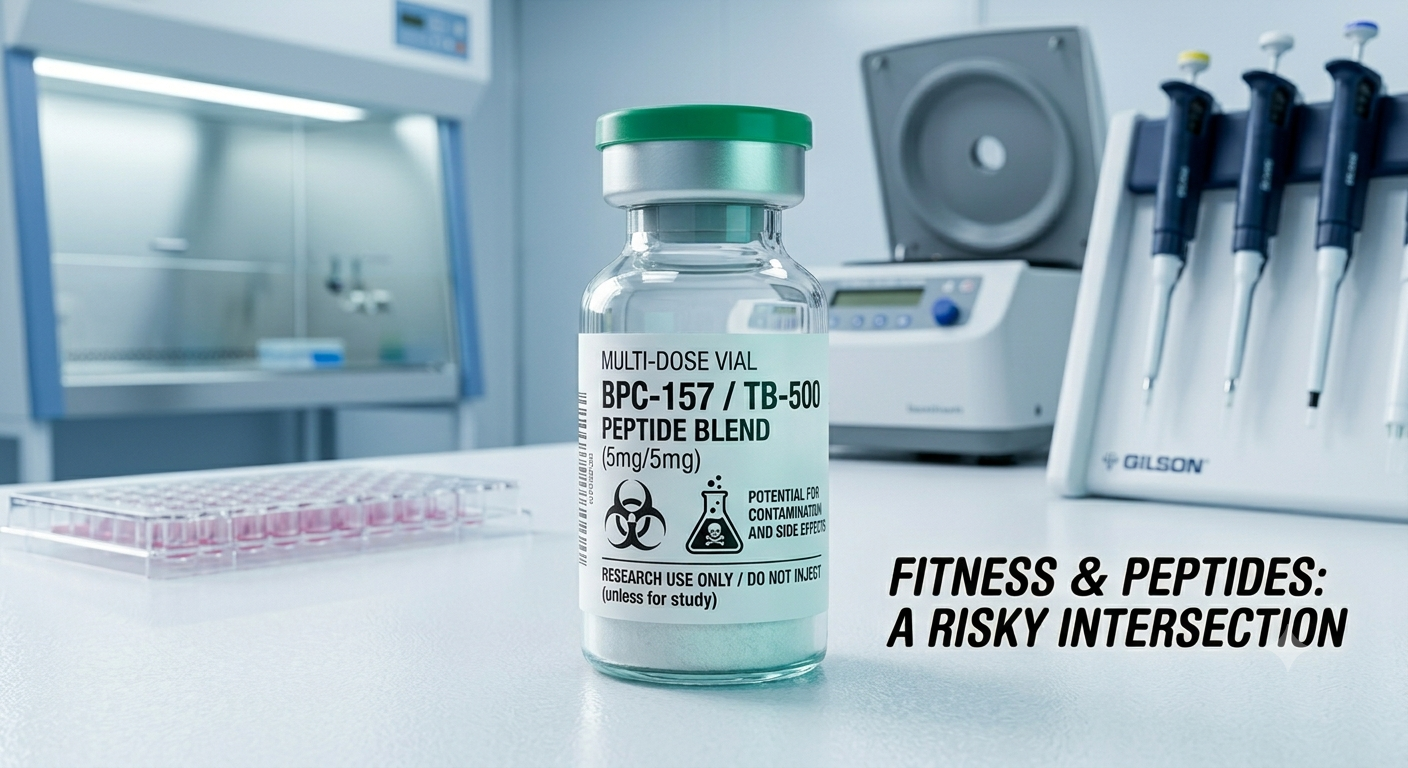
Scroll through fitness social media or listen to a longevity podcast and you'll hear about them: peptides. BPC-157, TB-500, CJC-1295, Ipamorelin, Semaglutide — names that sound like laboratory codes because that's exactly what they are. Peptides represent one of the most significant — and controversial — trends to enter the fitness and wellness space. Here's what you need to know before the hype outpaces the evidence.
What Are Peptides, Exactly?
Peptides are short chains of amino acids — essentially, smaller versions of proteins. Your body naturally produces thousands of peptides that act as signaling molecules: they tell cells what to do. Some trigger growth hormone release, others stimulate collagen production, and some influence inflammation pathways. The peptides being sold as supplements or research chemicals are synthetic versions of these naturally occurring signaling molecules, designed to produce specific biological effects.
The Most Commonly Discussed Peptides
BPC-157 is a synthetic peptide derived from a protein found in stomach acid. Anecdotal reports and animal studies suggest it may accelerate healing of tendons, ligaments, and the gut lining — but human clinical trials are extremely limited. TB-500 (Thymosin Beta-4) is promoted for tissue repair and recovery. CJC-1295 and Ipamorelin are growth hormone secretagogues — they stimulate the pituitary gland to release more growth hormone. Semaglutide (marketed as Ozempic/Wegovy) is a GLP-1 receptor agonist that's FDA-approved for diabetes and weight loss — and represents the rare case of a peptide with robust clinical backing.
The Evidence Gap
Here's the uncomfortable truth: most peptides discussed in fitness circles lack rigorous human clinical trials. The majority of evidence for BPC-157, TB-500, and similar compounds comes from rodent studies and anecdotal human reports. Animal models don't always translate to humans, and anecdotes are subject to placebo effects, confirmation bias, and the fact that people rarely report negative outcomes in online forums. The FDA has not approved these peptides for human use outside of specific medical contexts, and many are classified as research chemicals — not supplements.
The Real Risks
Because most fitness peptides exist in a regulatory gray zone, they're often sourced from compounding pharmacies or — more concerningly — unregulated online vendors. Quality control is a serious issue. Independent testing has found products with incorrect dosing, contamination, and even entirely different compounds than what was advertised. Side effects can include injection site reactions, hormone disruption, water retention, joint pain, and in some cases, more serious effects like anaphylaxis. Long-term safety data is essentially nonexistent for most of these compounds.
The GLP-1 Exception
Semaglutide and similar GLP-1 agonists (tirzepatide, liraglutide) are in a different category. These are FDA-approved medications with large-scale clinical trials demonstrating efficacy for weight loss and glycemic control. However, they still carry meaningful side effects — nausea, vomiting, muscle loss, and the potential for weight regain after discontinuation — and they should only be used under medical supervision. They are prescription medications, not lifestyle supplements.
What Actually Works (Without the Risk)
If your goals are recovery, muscle growth, and longevity, the evidence-based fundamentals still apply: adequate protein intake (1.6–2.2 g/kg), consistent strength training, quality sleep (7–9 hours), and stress management. Creatine monohydrate is one of the most researched and effective supplements available — it's safe, inexpensive, and supported by decades of data. Collagen peptides taken with vitamin C may support joint and skin health. These are the tools with established safety profiles and demonstrated efficacy.
Make Informed Decisions
If you're considering peptides, ask yourself: What is the quality of evidence supporting this compound? Am I sourcing it from a reputable, regulated provider? Do I understand the short-term and long-term risks? Am I under medical supervision? If the answer to any of these questions gives you pause, that's information worth listening to. Track your nutrition, training, and recovery in CrossTrainer first — you may find that optimizing the fundamentals delivers the results you're seeking without venturing into unregulated territory.